.svg)
.png)
.png)
.png)
.png)
.png)
Breaking the 500m Barrier In Dynamic Positioning Technology
How next‑generation targetless position reference sensors are improving offshore DP safety
Dynamic Positioning (DP) operations rely on accurate and resilient position reference systems to keep vessels safely separated from offshore assets. One of the most critical rules in offshore operations is the 500‑metre safety zone around installations — yet, until now, truly targetless DP sensors have struggled to operate beyond this limit.
At the 2025 DP Conference, Tom Coggins, Guidance Marine’s Technical Director presented new developments that aim to change this — safely, reliably, and without operational compromise.
The challenge with today’s DP sensors
Modern DP vessels depend on a mix of GNSS, target-based systems (such as prisms or transponders), and targetless sensors like lasers.
However, each comes with limitations:
- GNSS operations are prohibited due to shadowing effects of oil rigs
- Target-based DP systems depend on installed and maintained hardware on the asset
- Existing targetless laser systems are typically limited to ~200m due to eye‑safety and sensor constraints
This leaves operators facing difficult trade‑offs between safety, compliance, and practicality — particularly when operating near or beyond the 500m exclusion zone.
Why targetless positioning matters
Targetless systems use the asset itself - its structure and geometry - as the reference.
This approach:
- Removes reliance on external targets
- Reduces maintenance and operational risk
- Works with almost any visible offshore structure
- Mitigates GNSS degradation close to oil rigs
Because of these benefits, some oil majors are now mandating targetless sensors for vessels operating at their assets.
Two complementary technologies, one shared goal
To overcome the 500m limitation, Guidance Marine is developing two independent, complementary sensor paths — optical and radar — designed specifically for DP‑grade performance.
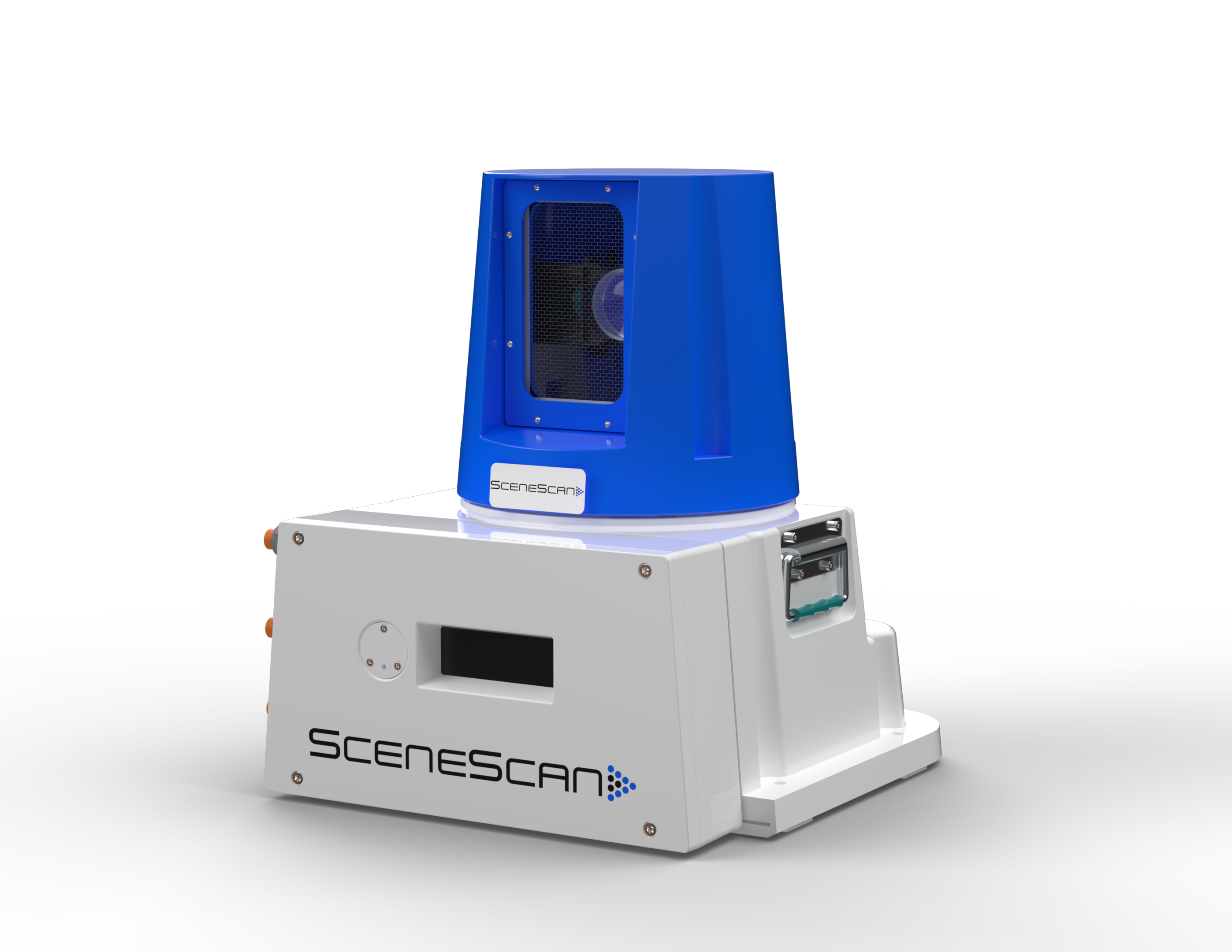
- SceneScan Digital – Next‑generation laser positioning
SceneScan pioneered targetless laser positioning using SLAM (Simultaneous Localisation and Mapping). While proven in service, its range was constrained to around 200m.
SceneScan Digital builds on this foundation by:
- Increasing optical sensitivity
- Dramatically boosting laser pulse rates while remaining eye‑safe
- Retaining the proven SLAM localisation engine
- Running on the established CyScan AS digital platform
The result is targetless laser positioning designed to operate well beyond 500m.
- RS77 with RadaScene – Long‑range radar positioning
Radar offers eye‑safe, weather‑resilient performance at long range — but traditionally lacked the resolution needed for DP.
Guidance Marine’s solution combines:
- RS77, a ultra high‑resolution 77GHz radar
- RadaScene, an advanced radar based localisation engine
Trials show RadaScene can maintain position and heading aligned closely with GNSS, even in challenging environments. With RS77’s significantly higher resolution, the system performance aligns with the performance requirements of DP systems.
What this means for offshore DP operations
Breaking the 500m barrier enables:
- Safer approaches and departures
- Fewer operational compromises
- Reduced asset-side maintenance
- Mitigation to GNSS shadowing
- Greater confidence in DP compliance and safety margins
Download the full whitepaper to access diagrams and statistics.

Ready to Elevate Your Vessel Positioning?
Whether you're navigating offshore installations, managing crew transfers, or advancing autonomous capabilities, our technology is built to deliver confidence at sea.

.png)
.svg)
.svg)